


PDG ibma
Automatic 3000w Donut Maker Commercial Donut Making Machine High Efficient Single lane Donut Production Line
Automatic 3000w Donut Maker Commercial Donut Making Machine High Efficient Single lane Donut Production Line
Regular price
CFA592,972 XOF
Regular price
CFA697,614 XOF
Sale price
CFA592,972 XOF
Shipping calculated at checkout.
Quantity
Couldn't load pickup availability
SPECIFICATIONS
Capacity: 500/h
Conveyor belt: 815*205*125MM
Donut size range: 20~120mm
Food Contact Material: 304 Stainless Steel
Material: 304 Stainess Steel
Max. Capacity: >10L
PACKING SIZE: 1052*400*650mm
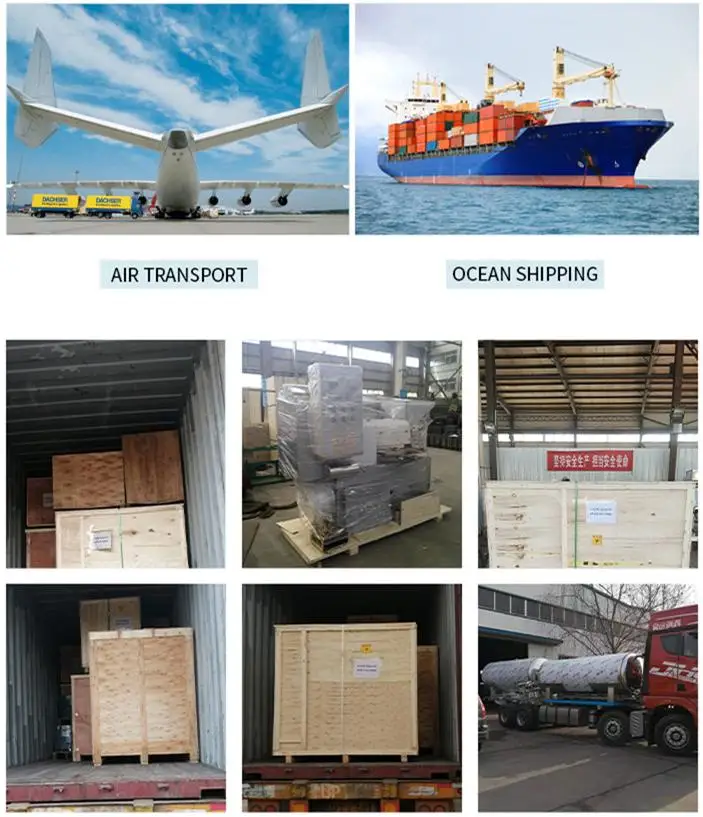
Package: Carton or wooden frame
Package Weight: 38kg
Product name: Automatic Donut productin line
Shape: Round
Special Feature: Lightweight
Tank size: 815*175*100MM/15L
Temperature Range: 50-300 Degree Celsius
application fields: Commercial Catering,Bakery,Snack Food Factory
brand name: Generic
condition: New
dimension(l*w*h): 1050*400*650mm
key selling points: High Productivity
machinery function: Donut making
output product name: donut
place of origin: Guangdong, China
raw material: Flour
voltage: 220 V | 110 V (optional)
warranty: 1 Year
weight: 38
Products Description
Features
1. HIGH EFFICIENCY: This professional donut maker boasts exceptional productivity, enabling it to meet the demands of a large-scale donut operation. The machine is capable of producing several hundred fresh, crispy donuts each hour.
2. THREE SIZES: The donut maker is equipped with three interchangeable nozzles, allowing for the creation of donuts in mini, medium, and large sizes. These donuts can be adorned with a variety of vibrant glazes, such as chocolate, caramel, and powdered sugar.
3. STAINLESS STEEL: Constructed from stainless steel, this donut maker is both durable and resistant to corrosion, ensuring it maintains its shape over time. The material is also easy to clean, requiring minimal effort for maintenance. With proper care, this appliance is designed for long-lasting use.
4. FULLY AUTOMATIC: The processes of forming, flipping, and collecting donuts are fully automated, streamlining the production process. The temperature settings are adjustable, and the appliance includes plastic jars and kitchen tongs for added convenience.
5. CONTINUOUS IMPROVEMENTS: We are committed to the ongoing enhancement of our product. In collaboration with our service center, warranty department, and customer support team, we ensure that each subsequent batch of equipment is refined to provide improved performance and longevity.

Advantages
The commercial dough mixer, an essential machine designed for efficient doughnut production. With a large 7-liter bowl and a robust 3000W power output, this mixer simplifies the process of making delicious doughnuts. Users can effortlessly prepare their batter, pour it into the hopper, add oil, and activate the machine, which takes care of the frying, turning, counting, and output of the doughnuts automatically.
This innovative machine boasts an impressive output capacity of 400 to 500 doughnuts per hour, depending on the size of the doughnuts being produced. Constructed from high-quality 304 stainless steel, it ensures durability and hygiene, making it suitable for both personal use and commercial applications. The machine operates on either 220V or 110V, accommodating various electrical setups.
For those seeking to expand their production capabilities, a two-row model is available upon request. The compact design, with dimensions of 1050mm x 400mm x 650mm, allows for easy integration into any kitchen or production space. With a packaging size of 1040mm x 400mm x 470mm and a net weight of 28kg, this dough mixer is both practical and efficient, making it an ideal choice for aspiring bakers and established businesses alike.
Product Paramenters

Product Name |
Donut Production line single lane |
|
Volts |
220V/110V |
|
Power |
3000W |
|
Output |
400-500pcs/hour |
|
Material |
304 stainless steel |
|
Mold size |
25, 35, 45mm |
|
Bucket capacity |
7L |
|
Oil tank size |
815 * 175 * 100mm/15L |
|
Packaging size |
1040 * 400 * 470mm |
|
Oil Tank Size |
850*205*180mm |
|
Machine size:1050*400*650mm |
||
Packing size |
1040*400*470mm |
|
N/G weight |
28/38kg |
|
Details Images

TEMPERATURE CONTROL
The level of temperature can be adjusted by a thermostat.
Two switches to start line, one is for feeding and frying, the other is for conveyor belt transportation

Timer and Counts
With premium time controller, it can precisely control the frying maturity so that avoid overcooking or undercooking.
The counts meter can record cooked donut quantity so that operator do not worry about the number counting

Feeding assembly
Automatic feeding and shaping assembly allows producing consistent shape and weight donut. it's stable and smooth to save energy

Food grade material
The body of this professional equipment is made of stainless steel that is widely used for kitchen appliances production. The material is durable and requires the minimum of maintenance effort.

INTERCHANGEABLE OUTLETS
with a set of nozzles, the thickness of donuts can be different

TURNING MODULE
the donuts flip automatically with no need for constant human supervision


HISTORY OF DONUT
At the National Museum of American History in Washington, D.C., one summer day last July, a curious exhibit stood on display: an upright piano and, beside it, a strange metal contraption about five feet high. This was the Ring King Jr., once America’s most advanced automatic doughnut maker, donated to the Smithsonian by the Krispy Kreme Doughnut Corporation in celebration of the brand's 60th anniversary.
In my childhood, I remember stopping by the Krispy Kreme shop in Alexandria, Virginia, where behind the counter a wide glass window revealed shiny conveyor belts and racks filled with fresh, glazed doughnuts. The air smelled sweet, rich with vanilla. At the Smithsonian’s dedication, the Ring King Jr. was hailed as a milestone in the history of doughnut-making. During the ceremony, Cindy Hutchins sang a playful song from the museum's archives: "Who made the doughnut with the hole in the middle? Just how it got there will always be a riddle."
The doughnut, it turns out, has a convoluted past that stretches across continents and centuries—Dutch immigrants, Russian exiles, French bakers, and even Hollywood stars have all played a role in its evolution. The origins of the doughnut are obscure, but most historians agree that it arrived in New York in the 17th century under the Dutch name olykoeks (meaning "oily cakes"). It wasn’t until the 19th century that the doughnut began to take its modern form.
Elizabeth Gregory, the mother of New England ship captain Hanson Gregory, is often credited with the invention of the doughnut hole. She made deep-fried dough using her son’s spice cargo—nutmeg, cinnamon, and lemon rind—and added hazelnuts or walnuts in the center to ensure the dough cooked evenly. Some legends claim that Captain Gregory himself created the hole to improve the doughnut's cookability, while others suggest he did so to make it easier to hang the doughnuts on the ship’s wheel during rough seas. Regardless, by the turn of the 20th century, Captain Gregory recalled using the top of a pepper box to cut the doughnut’s first hole, a moment he described as "the first doughnut hole ever seen by mortal eyes."
The doughnut didn’t truly become iconic until World War I, when American soldiers in the trenches of France were served doughnuts by women volunteers, who even brought the treats to the front lines. The doughboys returned home with a newfound love for the pastry. Interestingly, the term "doughboy" did not originally refer to the pastry but to soldiers, possibly because of their round brass buttons or because they used flour to polish their belts.
The first doughnut machine was invented in 1920 by Adolph Levitt, a refugee from czarist Russia. Levitt's machine, designed to produce doughnuts quickly and efficiently, revolutionized doughnut production. By the 1930s, Levitt’s machines were producing doughnuts at a rate that delighted customers and transformed doughnut-making into a public spectacle. People marveled at the "grease canals" and "dreamy" conveyor belts where doughnuts floated and tumbled, freshly fried and ready to eat. By 1934, the doughnut had achieved national recognition as the "food hit" of the Century of Progress World’s Fair in Chicago.
At the same time, doughnuts became more than just a treat; they embodied a sense of optimism and American can-do spirit. A popular saying from the era, printed on slips of paper with each doughnut purchase, encouraged people: "As you go through life, make this your goal: Watch the doughnut, not the hole." By the 1940s, doughnuts became even more tied to the American experience during World War II, when Red Cross volunteers—later known as the Doughnut Dollies—served doughnuts to soldiers.
In 1937, in Winston-Salem, North Carolina, Vernon Rudolph and his two friends borrowed $25 to start their own doughnut business. They sold Krispy Kreme doughnuts door-to-door and soon opened a small storefront. The sweet aroma of Krispy Kremes proved irresistible, and the company began selling both wholesale and retail, creating a distinctive business model that still exists today: customers could watch the doughnuts being made as they enjoyed the fresh, hot pastries. The neon "Hot Doughnuts Now" sign, still in use today, became an iconic symbol of the Krispy Kreme experience.
Krispy Kreme’s success grew exponentially after World War II. The company expanded its operations, and in the 1950s, the Ring King Jr. doughnut machine, designed to produce up to 75 dozen doughnuts an hour, became a key part of the production process. Despite competition from Dunkin’ Donuts, which was founded in 1950, Krispy Kreme flourished. By the 1980s, the Ring King Jr. was replaced by more advanced machines, but the doughnut’s popularity persisted, even as other pastries, like the bagel, began to challenge its dominance in cities like New York.
For a time, the doughnut seemed to lose ground in some regions. But college students in small towns like mine kept the doughnut tradition alive. In North Carolina, where Krispy Kreme originated, we’d drive for miles at 1 a.m. to buy the sweet treats. In the 1990s, Krispy Kreme experienced a resurgence, particularly in the South. Sales increased by 20 percent in 1997, and the New Yorker even called the Manhattan Krispy Kreme store a "shrine."
Today, Krispy Kreme stores are spreading across the U.S. and internationally. In 1997, they produced 1.1 billion doughnuts—only a small fraction of the total 10 billion doughnuts made annually in the U.S. Dunkin' Donuts, with stores in 37 countries, sells nearly five times as many. Despite the doughnut's high calorie count—each can carry 300 calories—its devotees continue to describe Krispy Kreme’s signature "original glazed" doughnut as "angelic" or "sugar-coated air."
The doughnut's rich history is also preserved at the Smithsonian. David Shayt, a collections manager at the museum, notes that the Ring King Jr., while retired to storage, is a vital piece of American history. In the future, if doughnuts were to disappear, the Smithsonian's collection—including a recipe card from Krispy Kreme—could help future generations learn how to make them.
The doughnut’s place in American culture is assured, its simple charm enduring for generations. Whether as a comfort food, a symbol of American ingenuity, or just a sweet indulgence, the doughnut continues to satisfy. And even though the secret recipe of Krispy Kreme remains locked in a safe in Winston-Salem, the doughnut's legacy is unmistakably secured in history.
Company Profile

Workshop
Professional dedicate in automatic donut production line for decades. there are 35 workers in production workshop. Consistent to improve the quality and efficiency of donut production line to satisfy customer demand.There are 20 different model to be adapt many application scenario. We can accept OEM and ODM.

Showroom
Spans 300 square meters for the showroom. Most of the donut production can be observed in our show room. There are 10 professional personnel who can serve our customer, including take pictures as evidence, check the production progress, documentation, query answer and so on.


Product packaging



FAQ
1.Q: What Is Your Minimum Order Quantity(MOQ)?
A: We are a manufacturer and generally do wholesales. However, trial orders are also acceptable and welcome!
2.Q: How Can I Pay For My Order?
A: (1).Telegraphic Transfer(T/T): We accept 30% T/T deposit before production and 70% T/T balance before shipment. 100% payment before production for sample orders
(2).Western Union(W/U): We accept 100% payment via the Western Union.
(3).Also can be pay on Alibaba.
3.Q: What Are The Shipping Costs?
A: (1).Shipping cost is based on number of packages, gross weight of those packages, total package volume and destination port.
(2).We will package your goods in the strong export standard cases, your order will be shipped via the most economical carrier, unless you specify otherwise.
4.Q: How About The Delivery Time?
A: (1).Some of the products are in stock at our warehouse is European plug, generally we need 1~3 days to change the plugs and package them before the delivery.
(2).Regarding to the non-stock products, the lead time is 15-30 days depends on your requirements and quantity.
(3).We will suggest you the fastest shipping methods when you need the products urgently.
5.Q: Can you help us to make our products?
A: Yes sure we can, our company OEM is warm welcome! Our company have 10 year's experience in making kitchen equipment, we are the professional kitchen equipment factory in Guangzhou/Henan.
Recommend Products


