PDG ibma
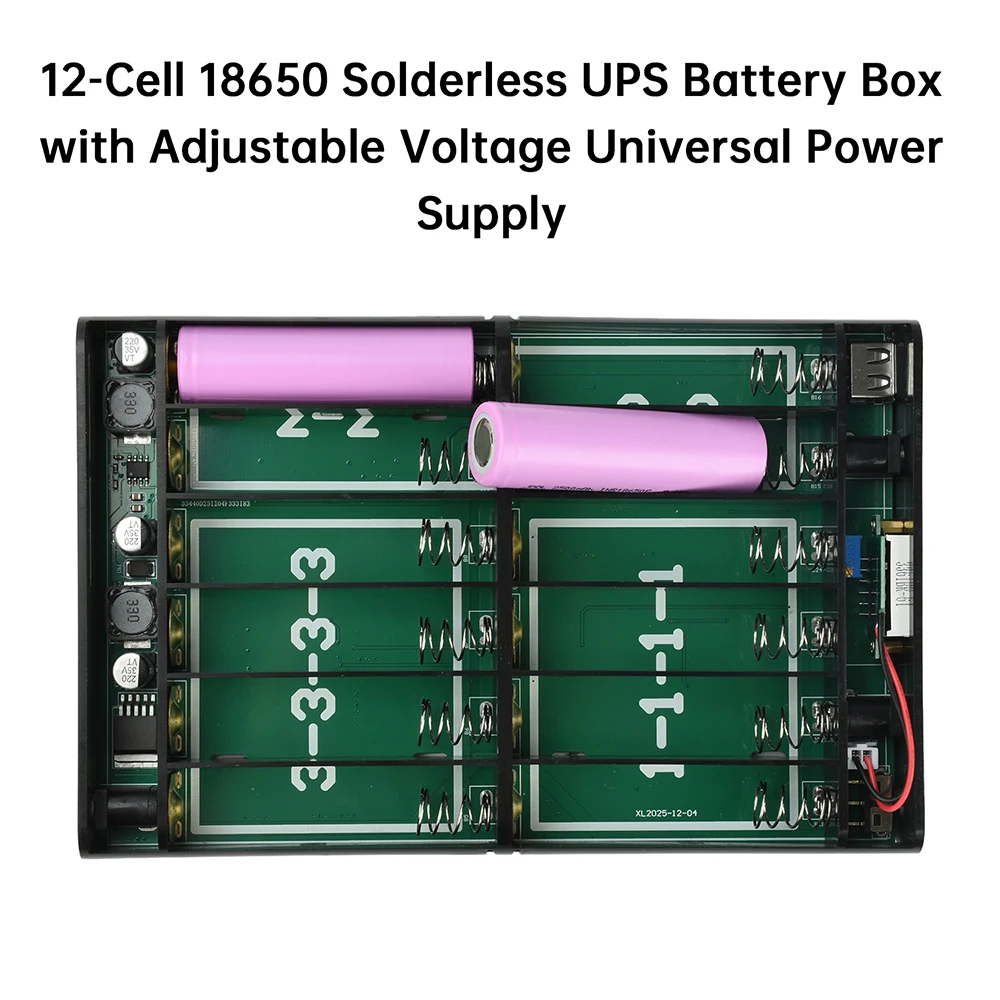
12 Sections UPS Battery Box Uninterrupted Power Supply Power Supply Storage Case 12x 18650 Battery shell for WiFi Router
12 Sections UPS Battery Box Uninterrupted Power Supply Power Supply Storage Case 12x 18650 Battery shell for WiFi Router
Couldn't load pickup availability
SPECIFICATIONS
Application: Security / Monitoring / Alarm
Battery Included: No
Brand Name: Aideepen
Choice: yes
High-concerned chemical: None
Model Number: UPS Battery Box
Origin: Mainland China
Output Voltage: 5V
Protection: Short Circuit
Type: On-line
Weight: 12-24V
is_customized: Yes
semi_Choice: yes

12 Sections UPS Battery Box Uninterrupted Power Supply Power Supply Storage Case 12x 18650 Battery shell for WiFi Router
Product Features
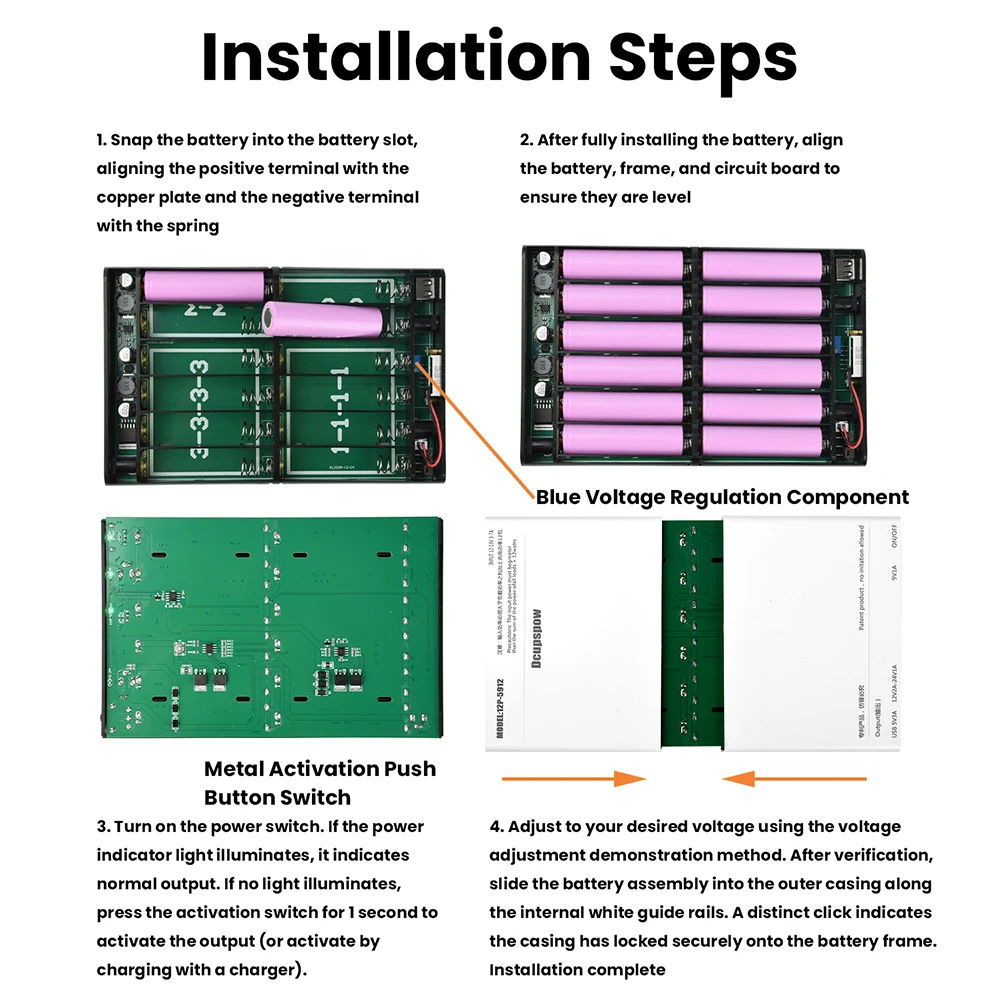
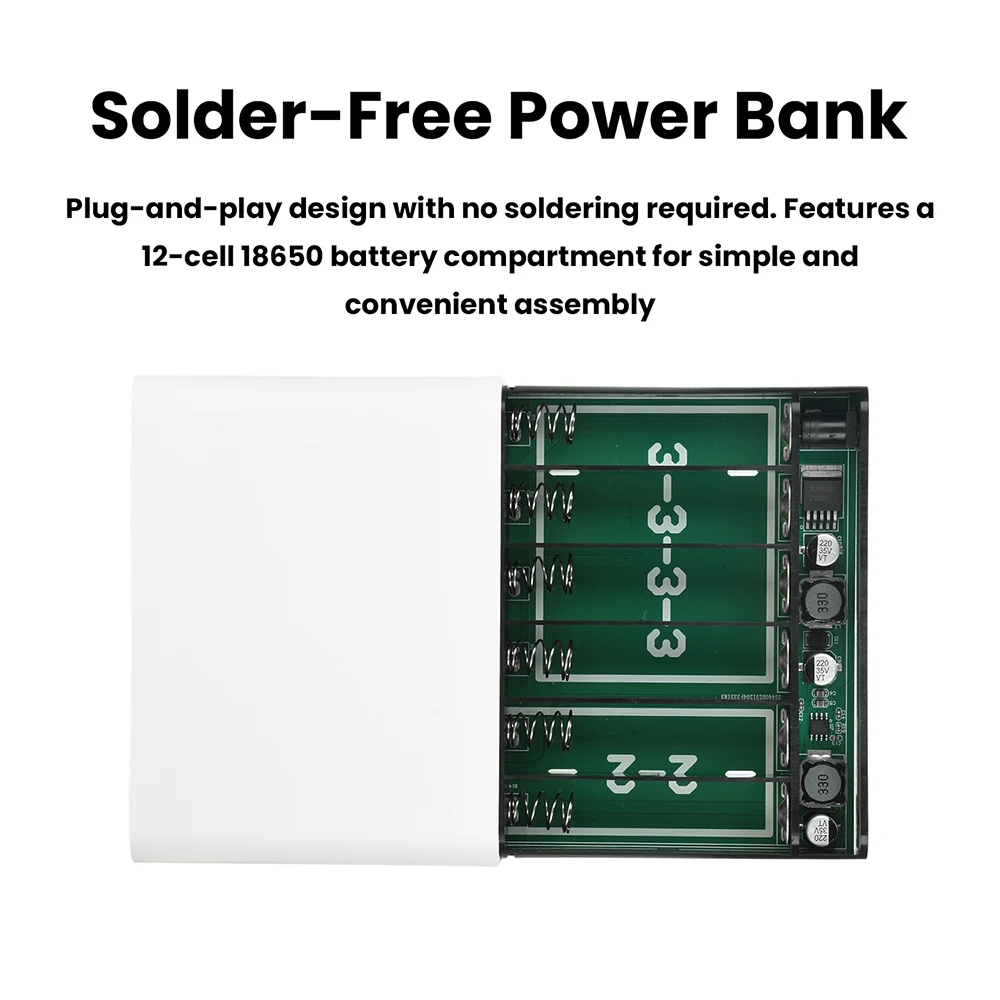
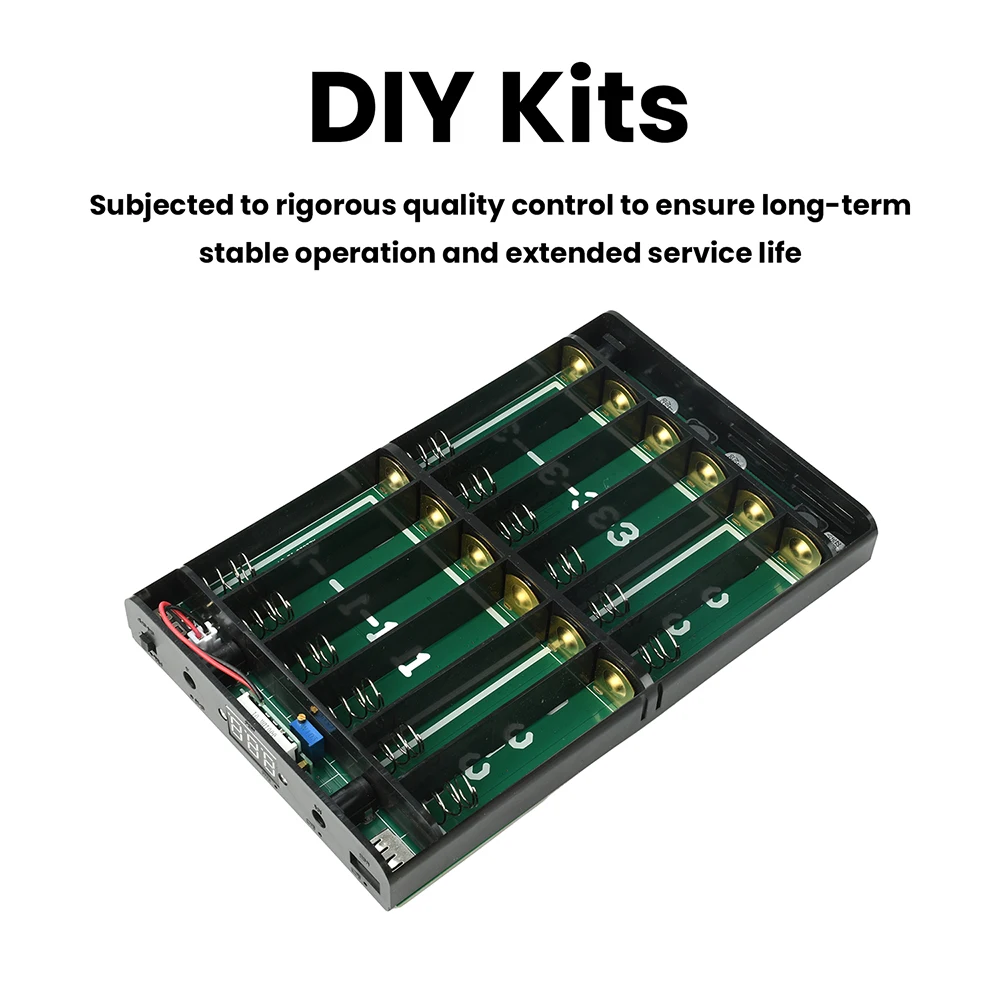
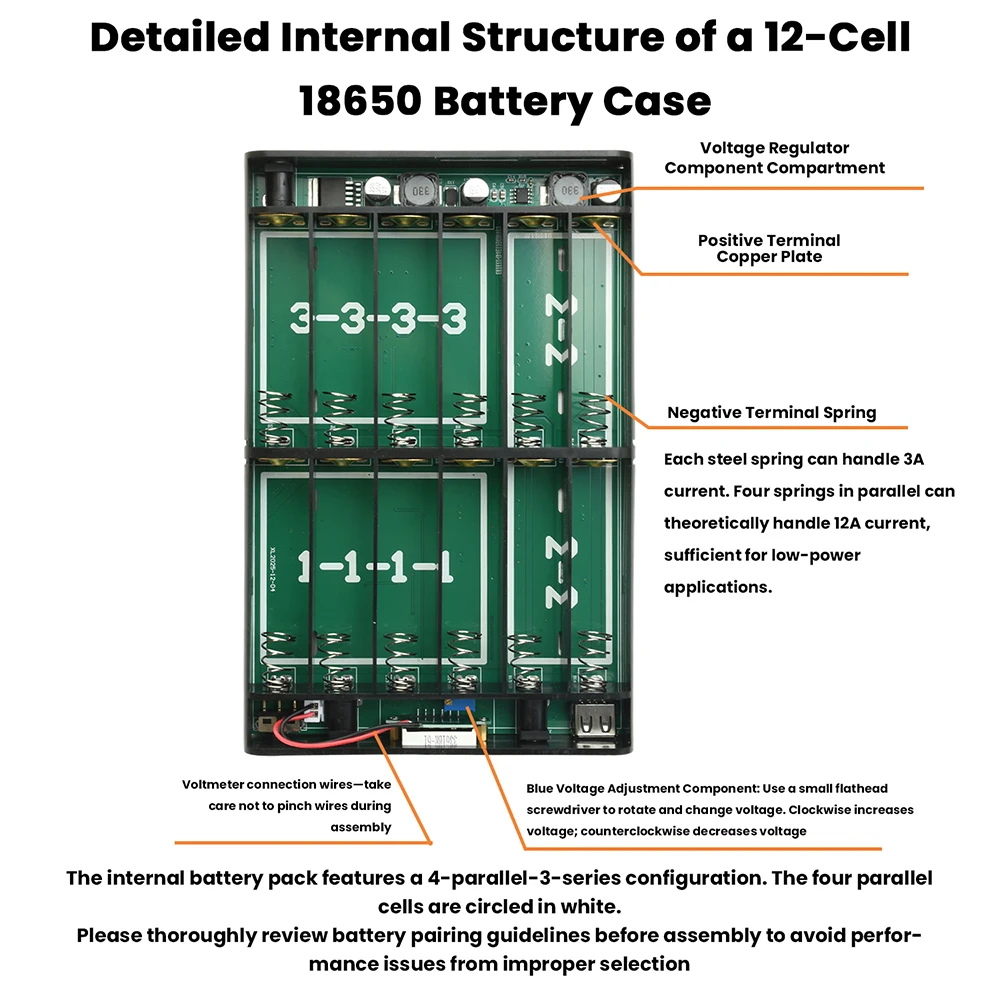
1. Solder-free plug-and-play design, 12-cell 18650 battery compartment, simple and easy assembly
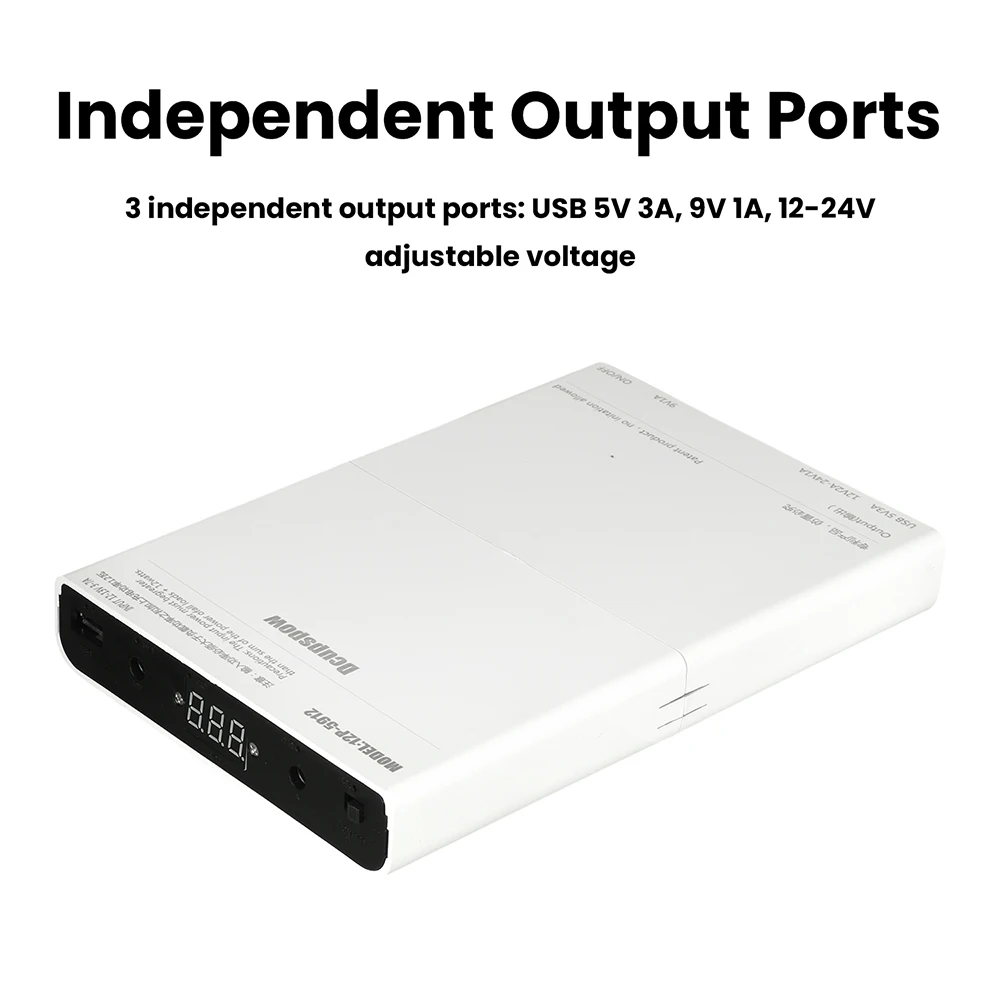
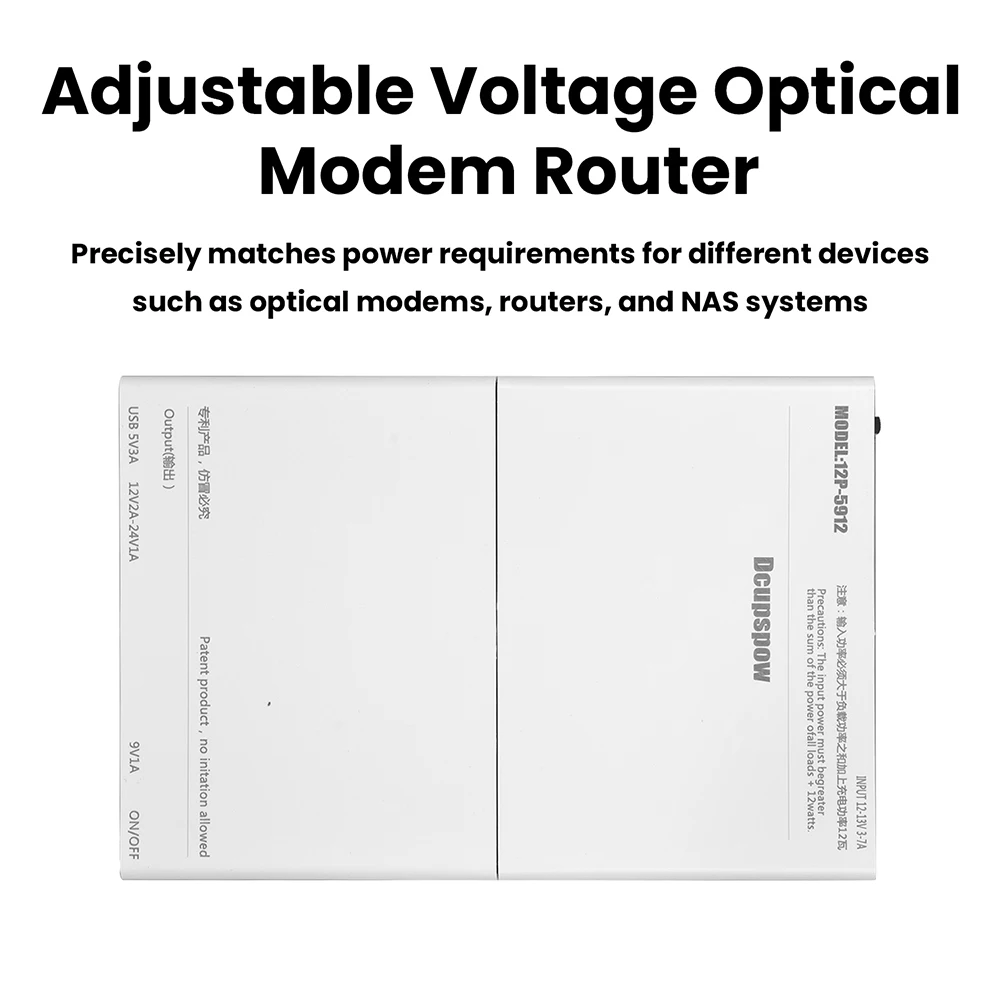
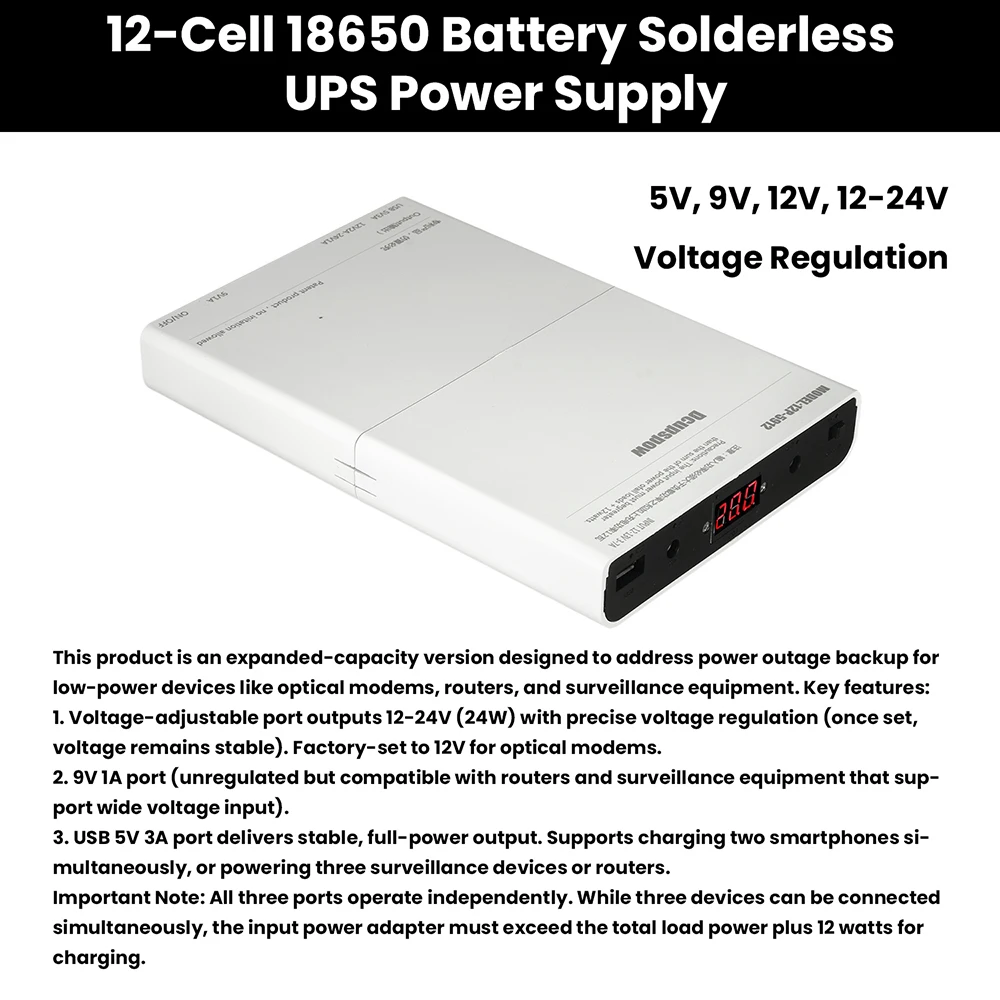
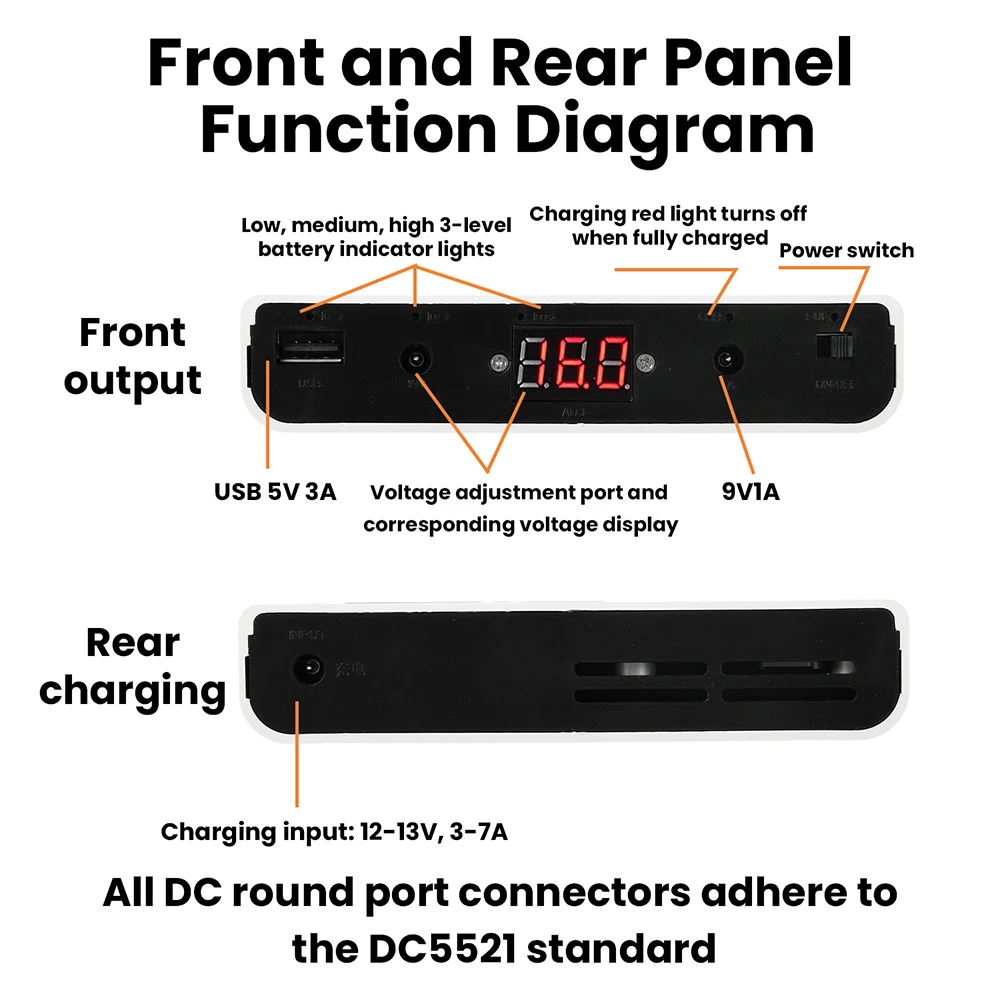
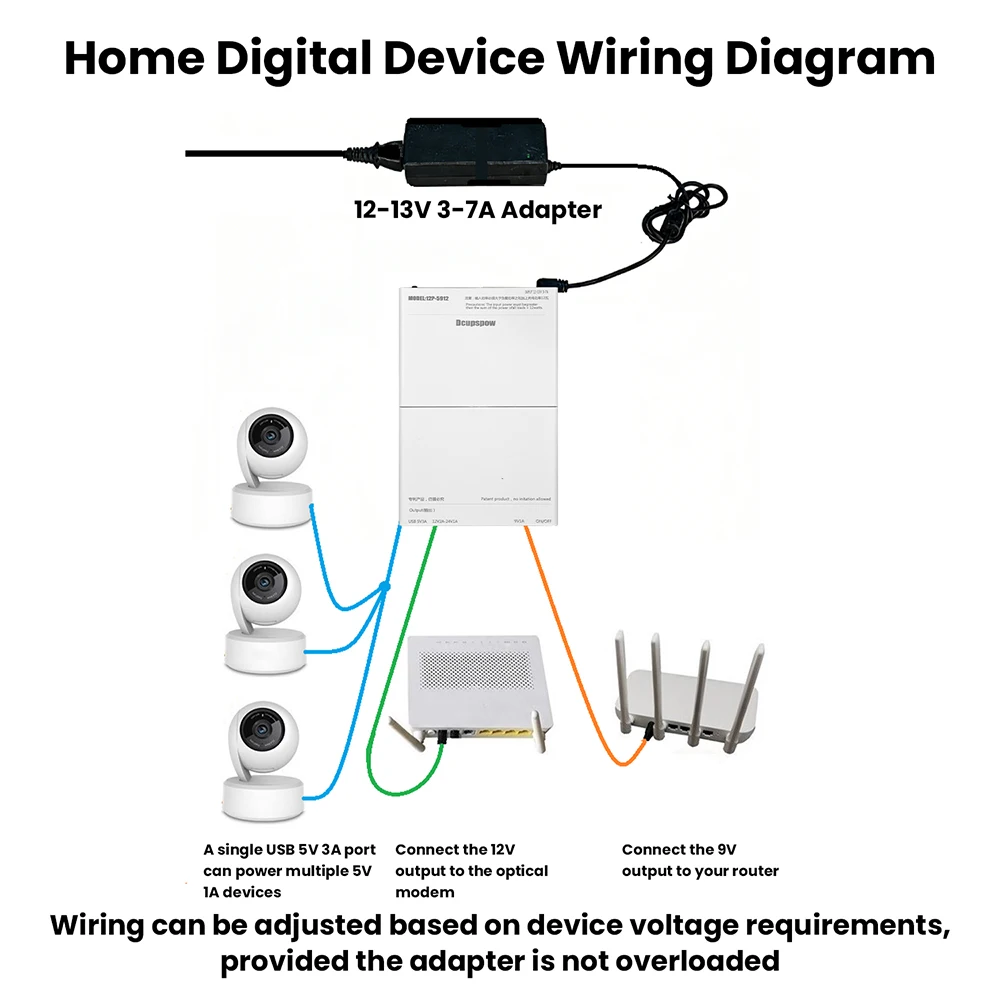
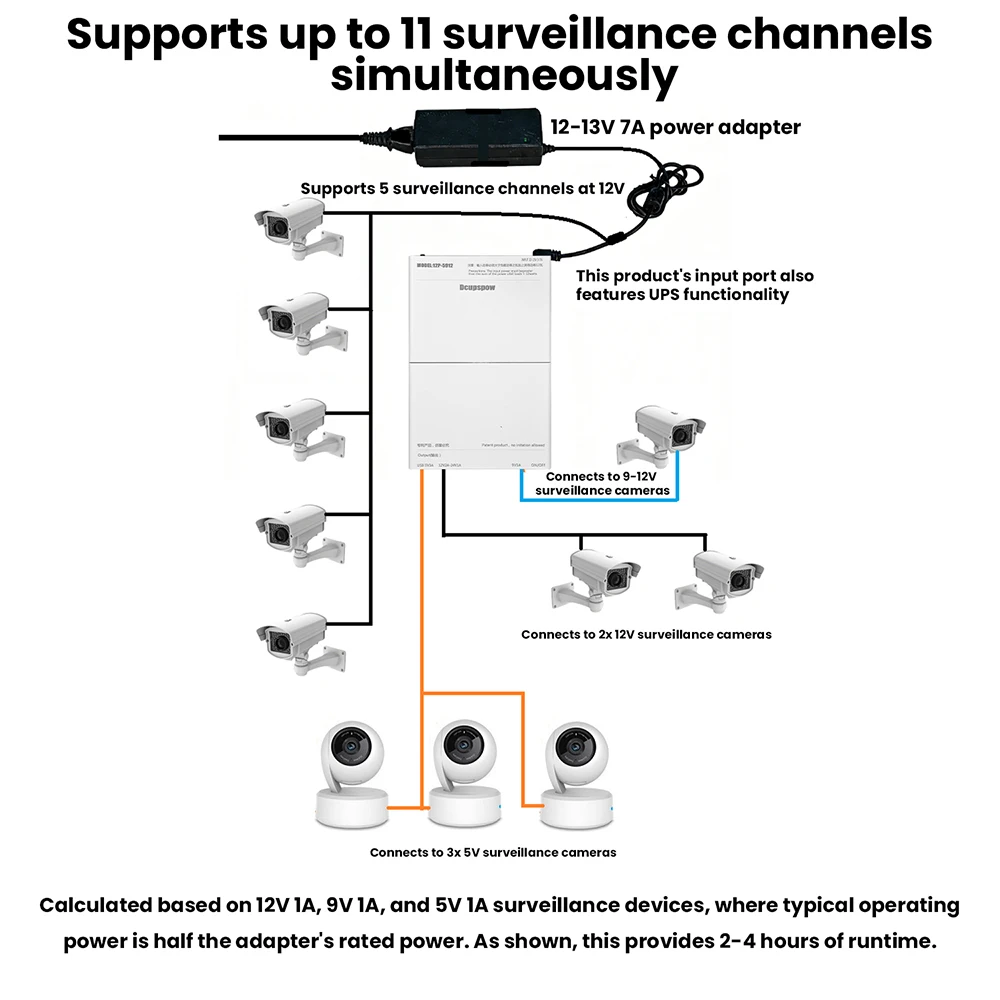
2. Three independent output ports: USB 5V3A, 9V1A, and 12-24V adjustable voltage
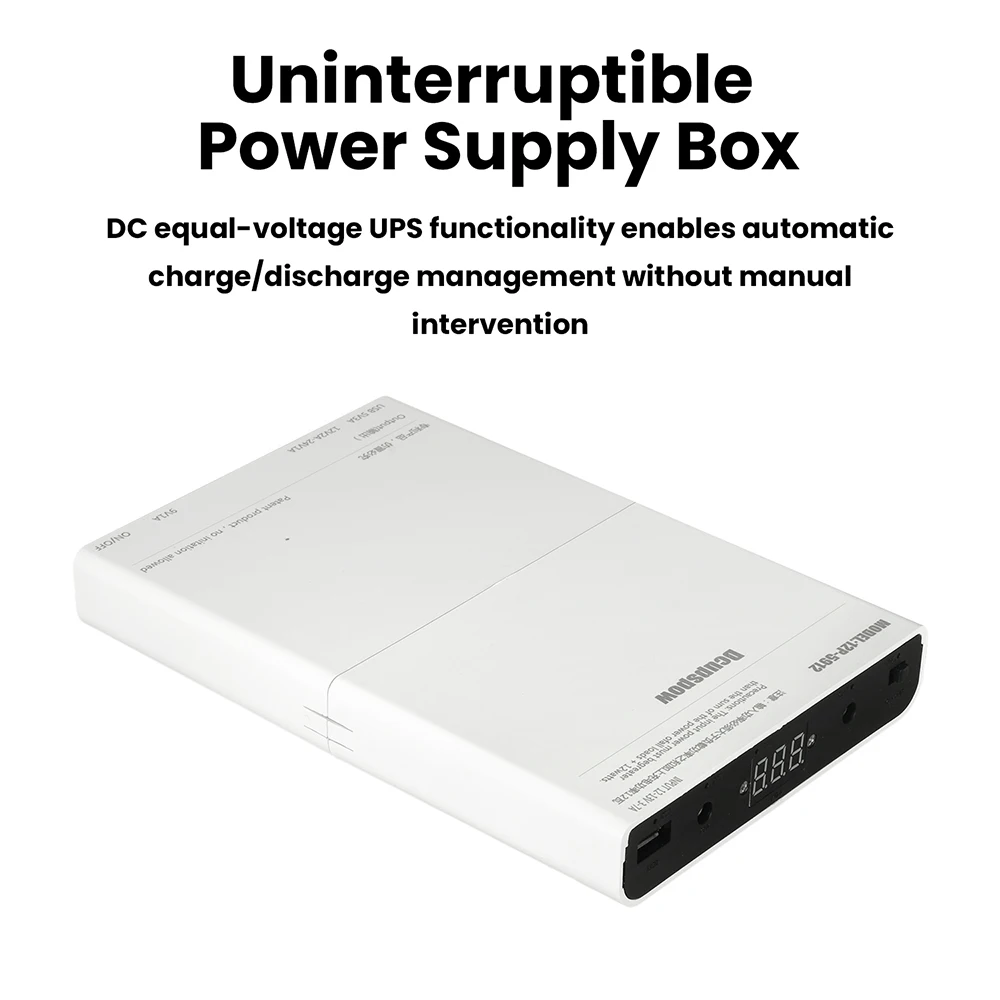
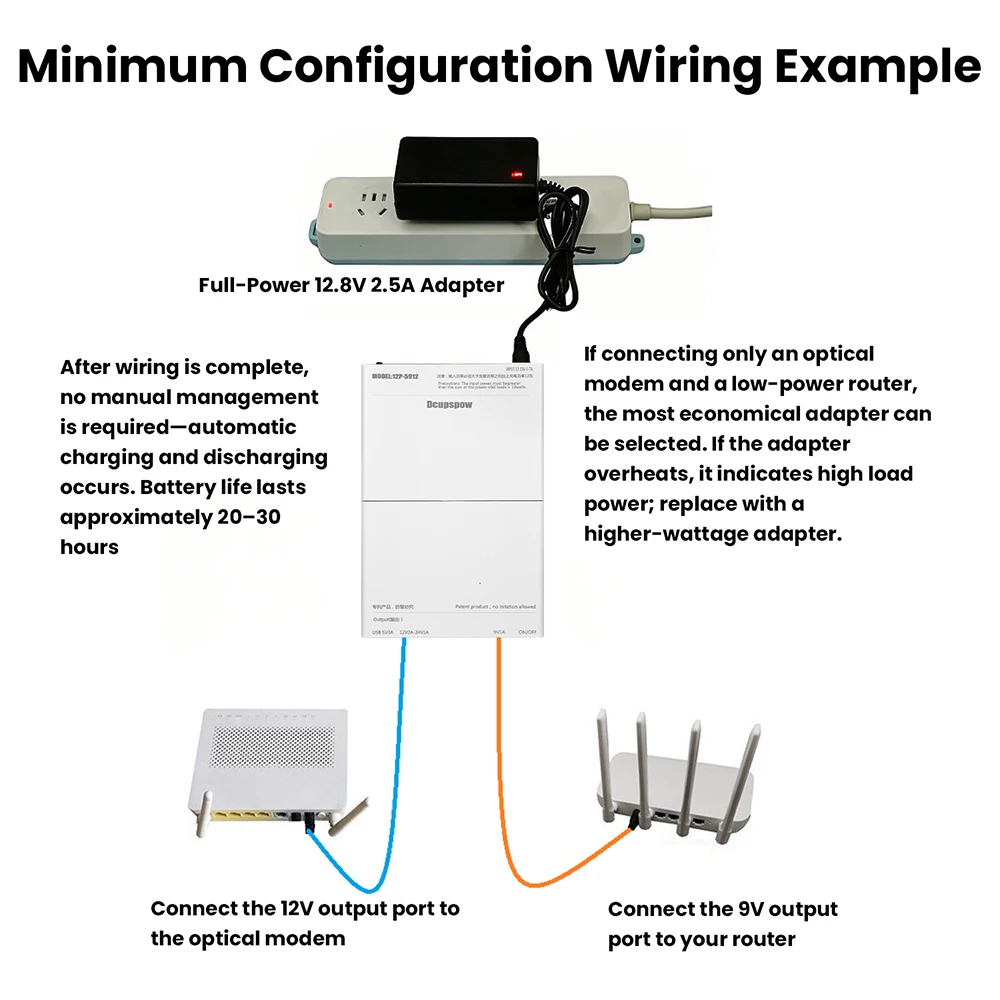
3. DC constant voltage UPS function, enabling automatic charge and discharge management without manual intervention
4. Accurately match the power supply requirements of various devices such as optical modems, routers, and NAS
5. Through strict quality control, ensure long-term stable operation and extend service life
Product Parameters
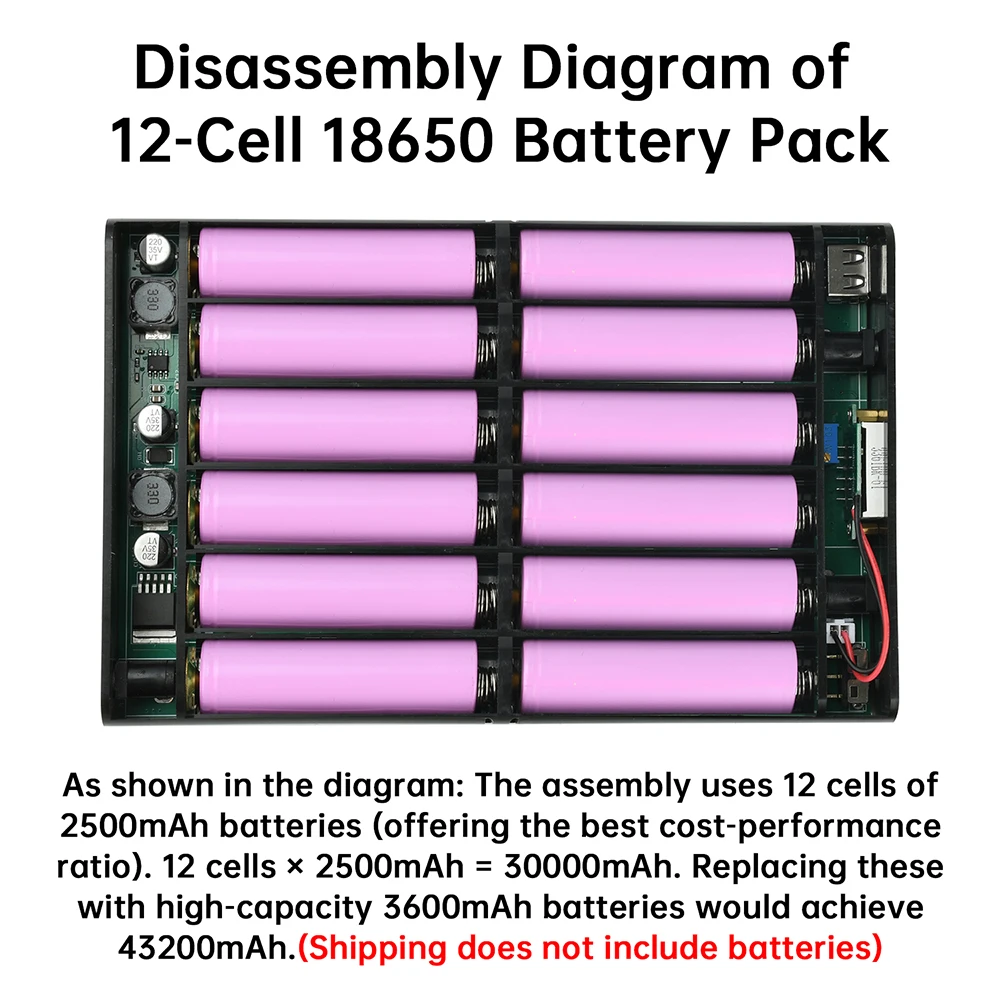
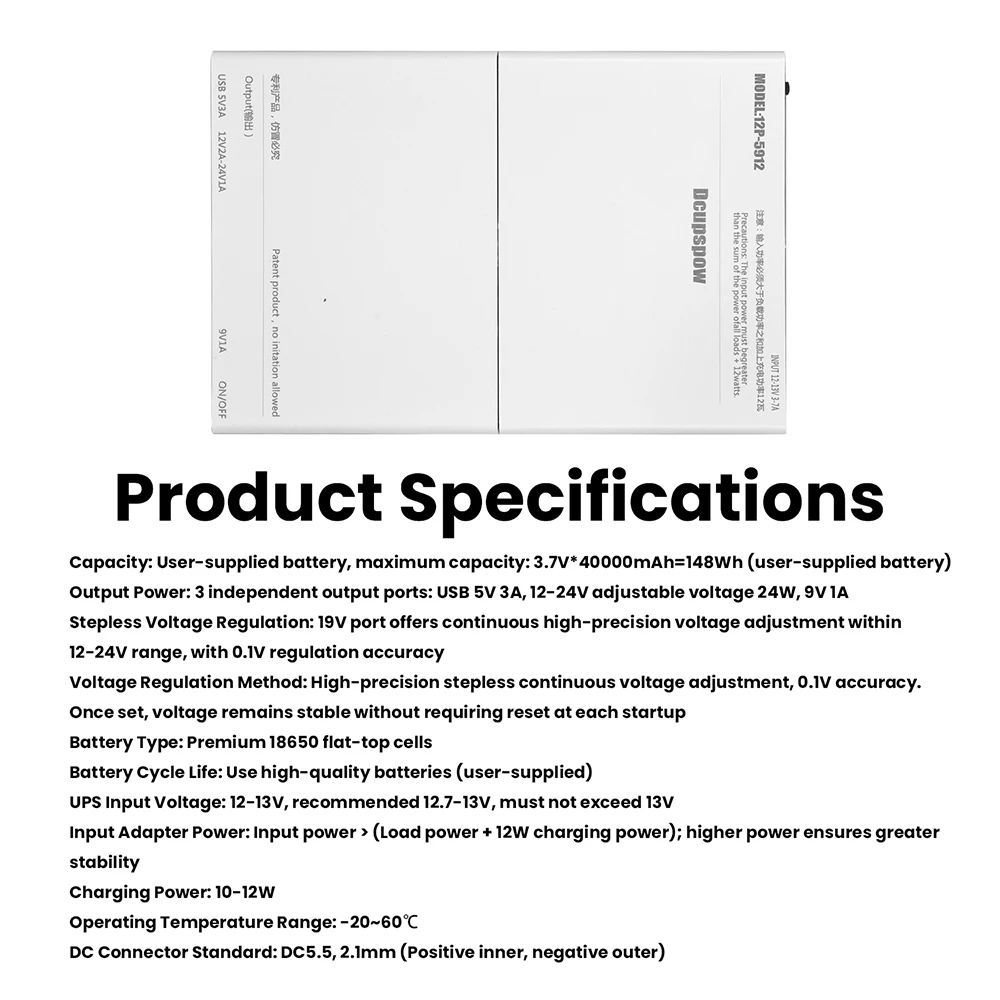
Capacity: User-provided battery, maximum installation capacity: 3.7V*40,000mAh=148Wh (user-provided battery)
Output Power: 3 independent output ports: USB 5V3A, 12-24V adjustable 24W, 9V1A
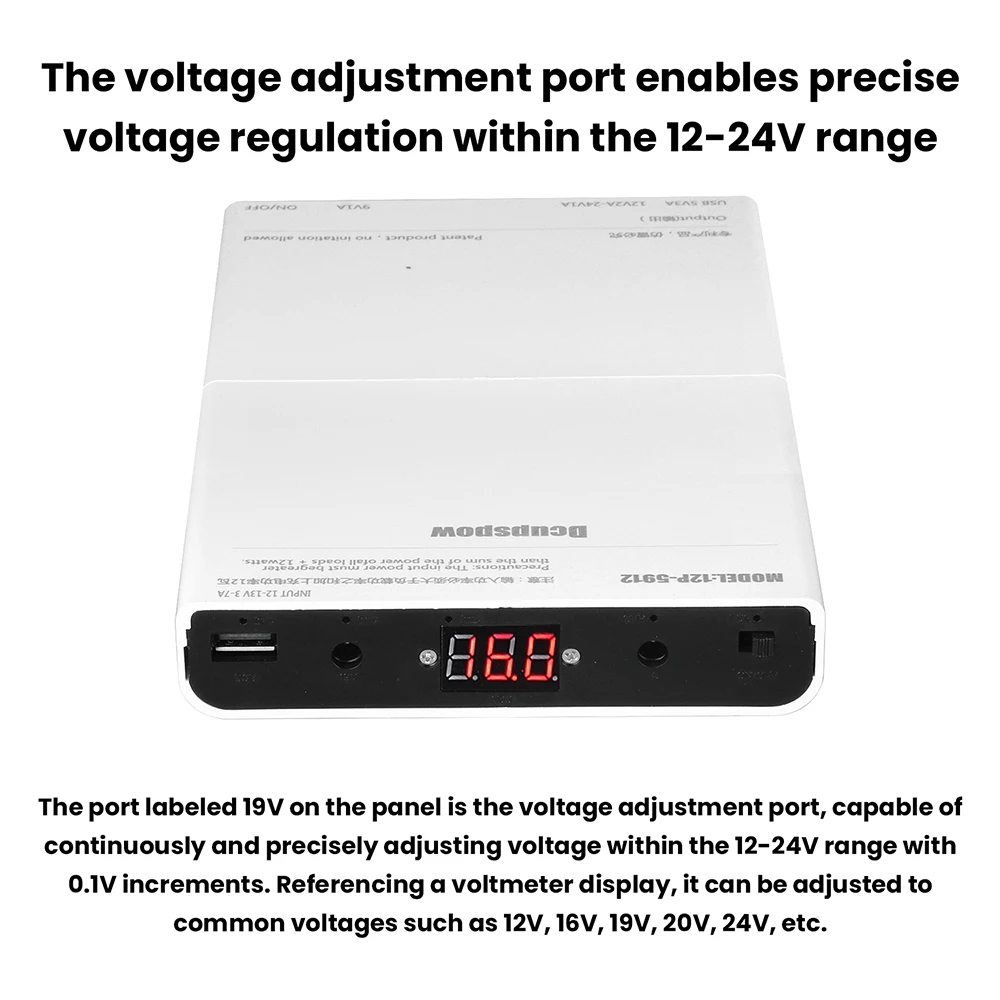
Stepless voltage regulation: The 19V port supports continuous high-precision voltage adjustment within the 12-24V range, with an adjustment accuracy of 0.1V
Voltage regulation method: High-precision stepless continuous voltage adjustment, with an accuracy of 0.1V. The voltage remains unchanged after adjustment and does not require re-setting upon each power-on
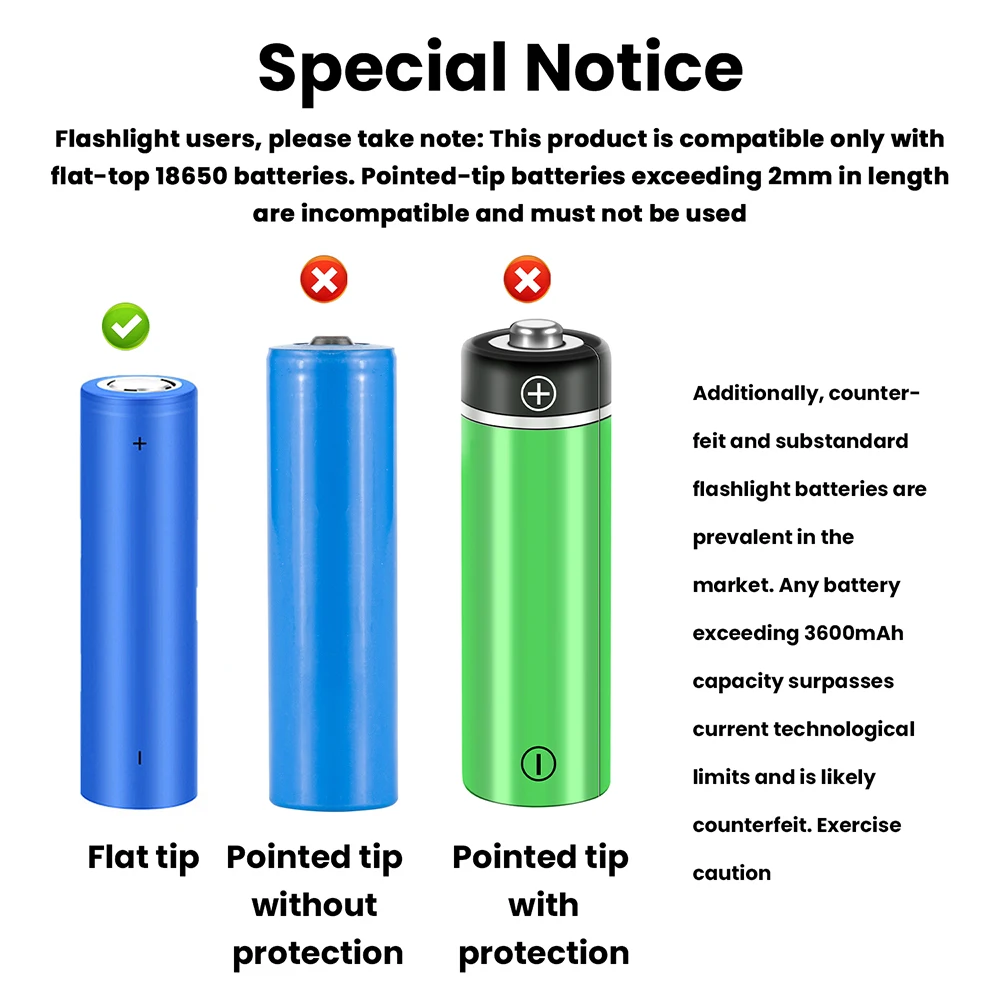
Battery type: 18650 flat-head premium battery
Battery cycle life: Please use high-quality batteries (batteries provided by the user)
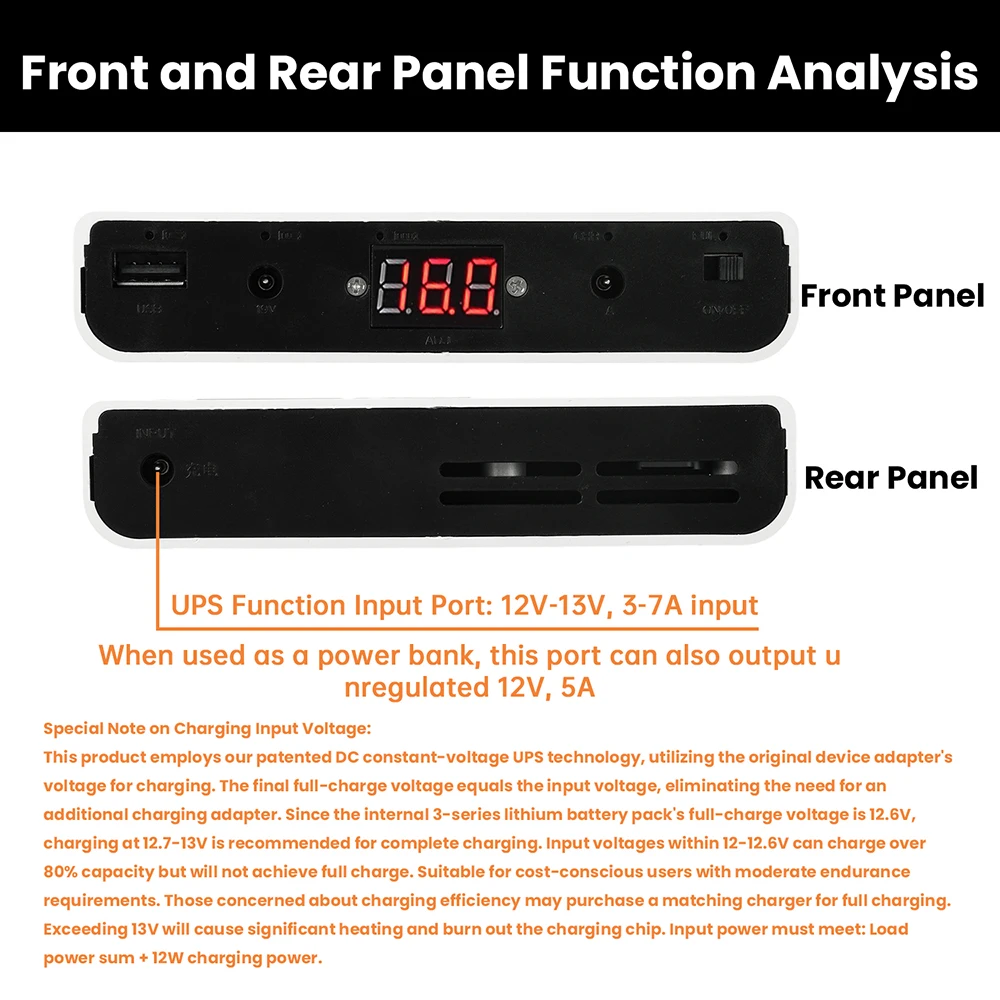
UPS input voltage: 12-13V, recommended 12.7-13V, must not exceed 13V
Input adapter power: Input power > (Load power + 12W charging power). The greater the power, the more stable
Charging power: 10-12W
Operating temperature range: -20°C to 60°C
DC interface standard: DC5.5, 2.1mm (positive inside, negative outside)
Packing List
UPS power supply *1
DC5521-5525 wire *1
Common Knowledge on Battery Pack Selection and Pairing
ABOUT THE CAPACITY
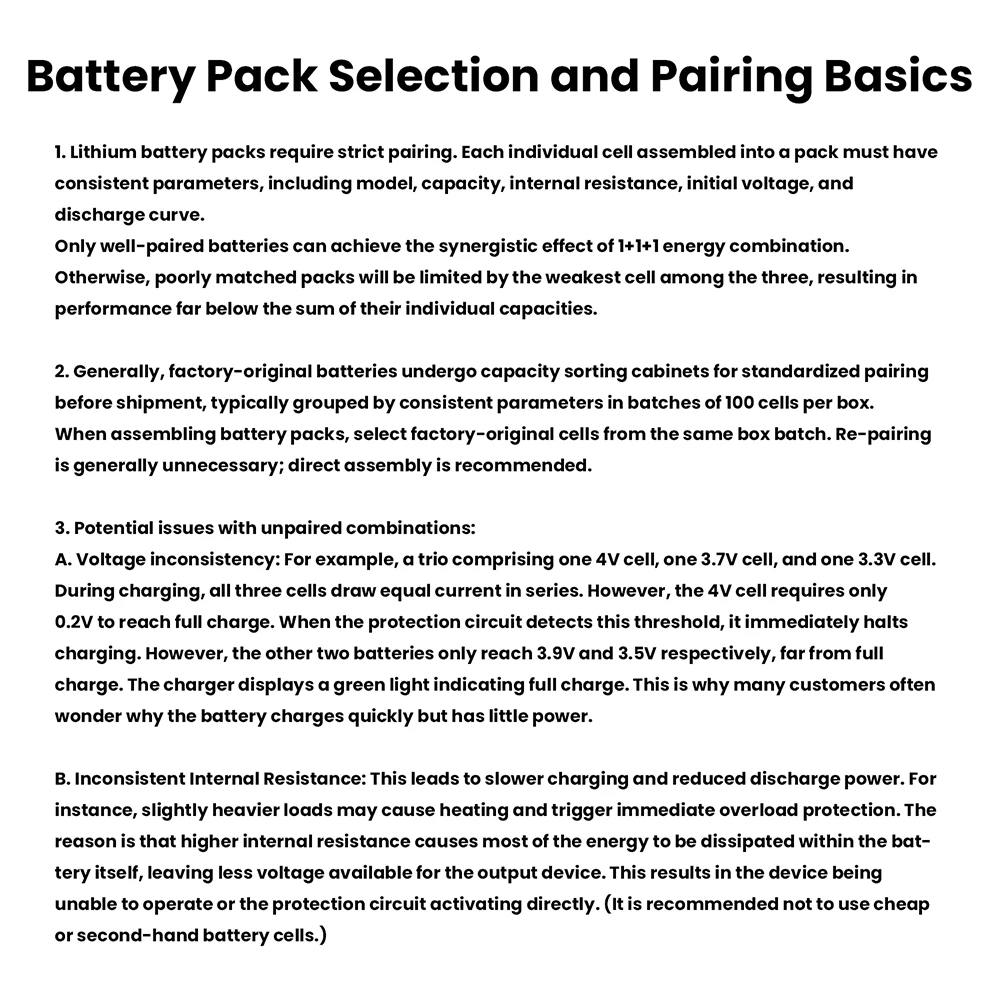
The pairing requirements for lithium battery packs are stringent, with each individual battery cell in the pack needing to have as consistent parameters as possible,
Including model, capacity, internal resistance, initial voltage, and discharge curve
Only well-matched batteries can achieve the 1+1+1 energy combination effect.
Otherwise, poorly matched sets will be limited by the weakest battery among the three, resulting in significantly lower performance than the combined energy of all three batteries.
Generally, the original batteries produced by factories are sorted and uniformly matched according to standardized criteria before leaving the factory,
Generally, a box of 100 pieces is used as a consistent parameter unit for grouping.
For processing battery packs, it is recommended to use original batteries from the same factory in identical packaging, which generally do not require re-pairing and can be assembled directly.
3. Possible outcomes if not strictly paired and randomly combined:
A, voltage inconsistency, such as combining three batteries with voltages of 4V, 3.7V, and 3.3V respectively, results in the following scenario: during charging, the three batteries are connected in series and receive the same charging current, thus acquiring equal energy. However, the 4V battery only needs an additional 0.2V to reach full charge. The protection circuit detects that one battery has reached the full-charge threshold and immediately cuts off the charging. Meanwhile, the other two batteries only reach 3.9V and 3.5V, far from being fully charged. The charger displays a green light indicating a full charge. This is why many customers often don't understand why the device appears fully charged quickly but doesn't hold much power.
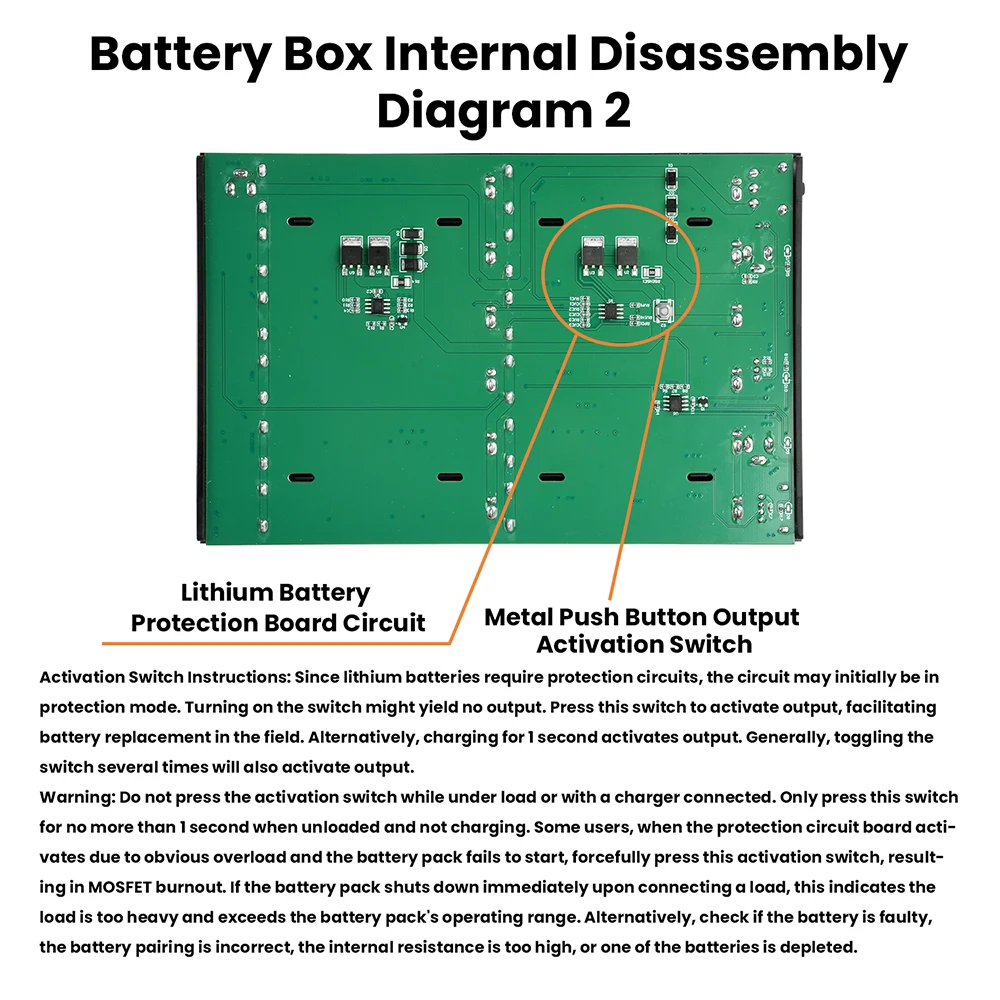
B. Inconsistent internal resistance: This can lead to slower charging and lower discharge power, such as heating when slightly overloading and immediate overcurrent protection. The reason is the higher internal resistance, where most of the battery's power is consumed by its own resistance, resulting in lower voltage distribution to the output devices. This may cause the battery to fail to power the device or trigger direct protection by the circuit. (It is recommended to avoid using cheap or second-hand battery cells.)
C, Different Capacities: For example, when three batteries with capacities of 1000mAh, 2200mAh, and 2600mAh are combined with identical other parameters, the charging behavior will be as follows: the 1000mAh battery will quickly reach 4.2V and be fully charged, while the other two may not even reach half their capacity before the protection board cuts off charging at around 3.7V. During discharge, assuming all three batteries are fully charged, the 1000mAh battery will rapidly drop to a low voltage until the protection board stops output, while the other two may still retain most of their charge. The battery with smaller capacity becomes the bottleneck of the battery pack.
D, the discharge curves vary, with significant individual differences among batteries and inconsistent discharge plateaus,
Good batteries have a long discharge time between 3.7-3.9V, while poor batteries exhibit a primary discharge plateau in the 3.5-3.7V voltage range. In a series circuit, each battery delivers the same output current but differs in voltage, leading to inconsistent energy output. This results in higher-capacity batteries doing more work while lower-capacity ones contribute less, ultimately accelerating battery degradation over time.
E, the discrepancy caused by time, the battery packs composed of new batteries with consistent parameters perform well,
F, but as the usage time extends, the parameter decline curves of the individual batteries within the battery pack become inconsistent
G, as the usage time increases, the parameter differences among several batteries may widen, potentially leading to issues such as shortened protection lifespan and incomplete charging. Generally, imported battery cells exhibit smaller variations, while currently, domestic battery cells show slightly larger individual parameter differences after prolonged use.
H, F, model differences, this is a combination of the above factors, meaning each condition may vary, and the situation is more severe
I, G, often observe an issue when battery pairing is suboptimal: unstable charging, where the charger alternates between red and green lights, potentially damaging the charger due to intermittent charging. If this occurs, please inspect the battery pairing balance yourself.